|
|
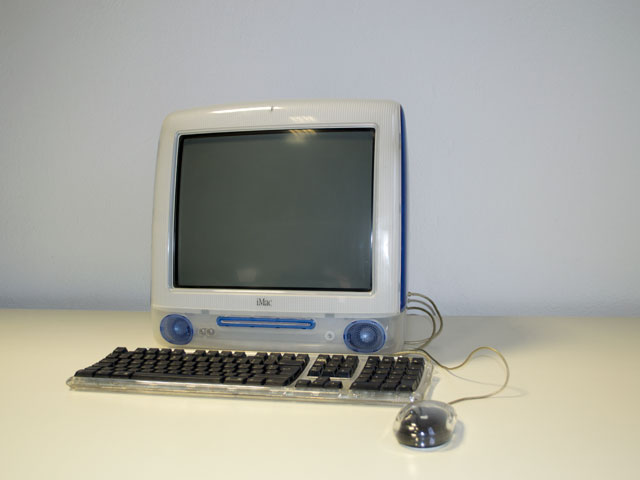
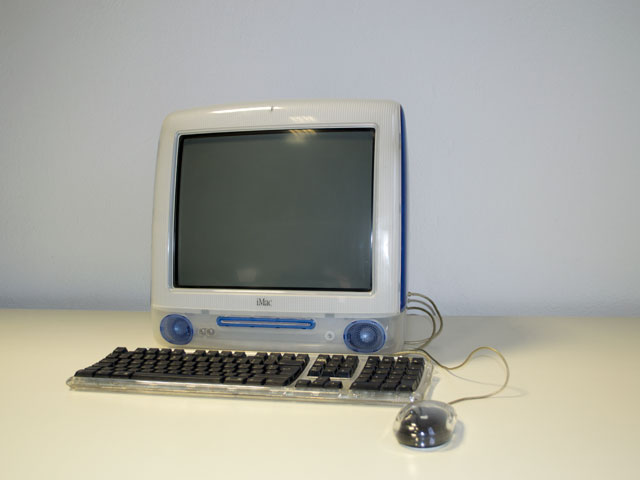 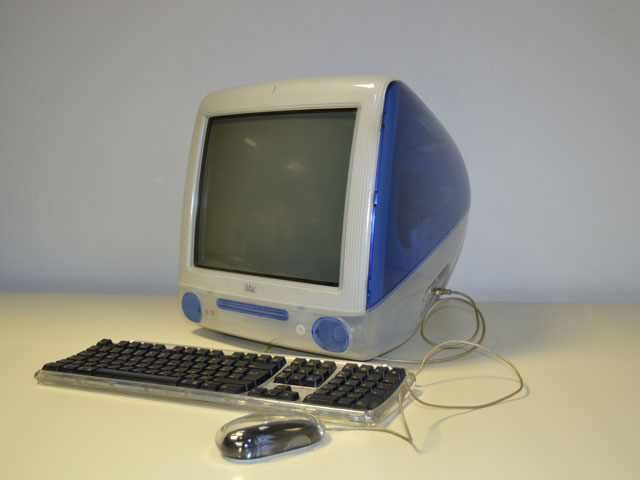 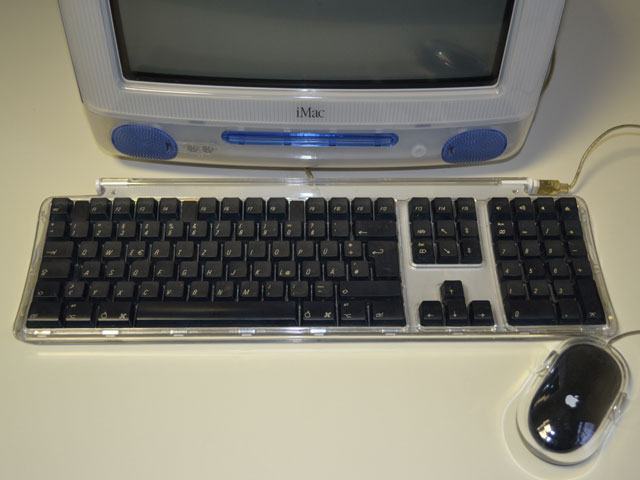 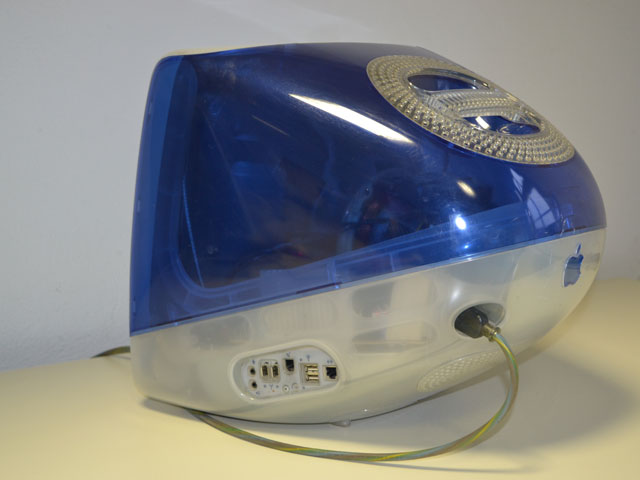 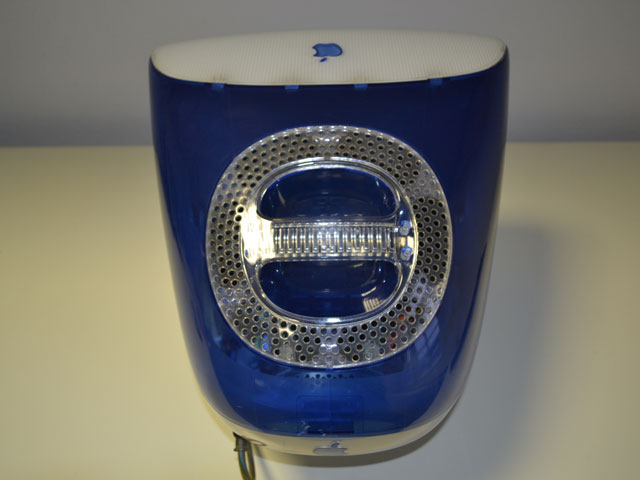
| iMac DV (indigo) | | Apple Computers, Inc., 2000 | CPU: PowerPC G3 (400MHz)
Memory: 348 MB RAM
Grafics: ATI Rage 128 Pro graphics processor (8 MB memory)
Hard drive: 10 GB Ultra-ATA (5400RPM)
Optical drive: CD-ROM
Modem: integrated 54k
Ports: 2xUSB 1.1, 2xFirewire, Ethernet, Audio In, Audio Out
Operating System: Mac OS 9.0.4 (currently installed), Mac OS 10.3.9 'Panther'(available)
Installed Software (under Mac OS 9): Apple Works 6, Apple Utilities (Sherlock 2, Quicktime,...), MS Internet Explorer, MS Outlook Express | | The iMac G3 was the first model of the iMac line of personal computers made by Apple Inc., and the originator of the Legacy-free PC market category. Like the first Macs, the iMac G3 is an all-in-one personal computer, encompassing both the monitor and the system unit in a single enclosure. Originally released in Bondi blue and later a range of other brightly colored, translucent plastic casings, the iMac shipped with a keyboard and mouse in matching tints. | The iMac G3 was prominent in early 2000s pop culture. It was featured on many different TV series and movies. The iMac was the first computer to exclusively offer USB ports as standard, including the connector for its new keyboard and mouse, thus abandoning previous Macintosh peripheral connections, such as the ADB, SCSI and GeoPort serial ports.
The computer was used at the Berlin Institute of Technology (BIT) at the faculty of Managment and Economics. It was given to the museum by Dr. Martin Wersing – researcher at the BIT. The iMac was primarily a Desktop (typewriting, browsing, email, etc.) and also a terminal to access the Unix operated SFB-Servers. |
|
|