3.5-inch floppy disk
3M LCD Projection Panel
5.25-inch floppy disk
8-inch floppy disk
Apple graphics tablet
Apple Newton MessagePad 120
Asus P65UP5 W/ C/P6ND
Atlas R300
Brother Procal 508AY
Casio Cassiopeia E-125 G
Casio FX-795P Pocket Computer
CASIO PC FX-730P
Cassette recorder
Cisco 800 Series Router
Compaq iPAQ Pocket PC
Consul, the educated monkey
CPU Module for Sun Ultra 60 Workstation
CTX Beamer
Freecom Classic CD-Rom
Freecom Portable CD-RW
Hard Disk Drive
HP-97
Iomega Zip 100
iPod
Konkret 100
MBO 80SCF
Mega Image 55cx
MR 201
Okto-Power (power supply unit)
Olympia CD60
Olympus Camedia C-410 L
Original PRODUX calculator
Palm 3COM III
Plasmon CDR 4220
Privileg LC 10000 Super Timer
Program cassettes of TIMEX SINCLAIR 1000
PSION SERIE 3
Punched cards
Quantum Bigfoot hard drive
REISS Slide Rule
Sharp PC-1401
SHARP Pocket Computer PC-1246S
SHARP Pocket Computer PC-1270
SHARP Pocket Computer PC-1403H
Sinclair ZX Spectrum Home Computer
SR1 (Schulrechner1)
Sun GWV Speaker Box
Sun LSA800
Tento TV Set
Texas Instruments SR-10
Texas Instruments TI 1750
Time CALCULATOR, MR 413
Toshiba CD-ROM drive
TrackMan Wheel
VEB LC80
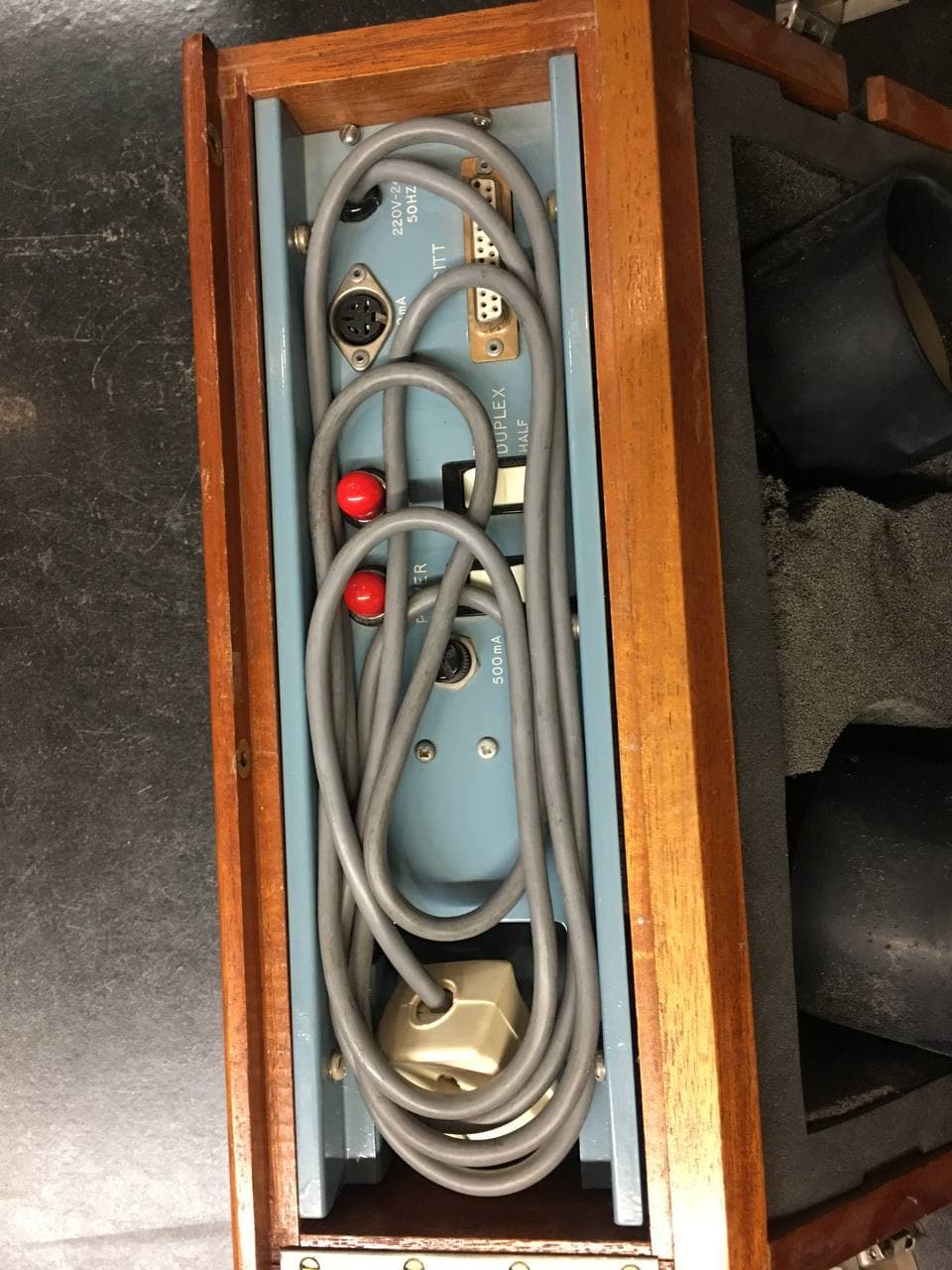
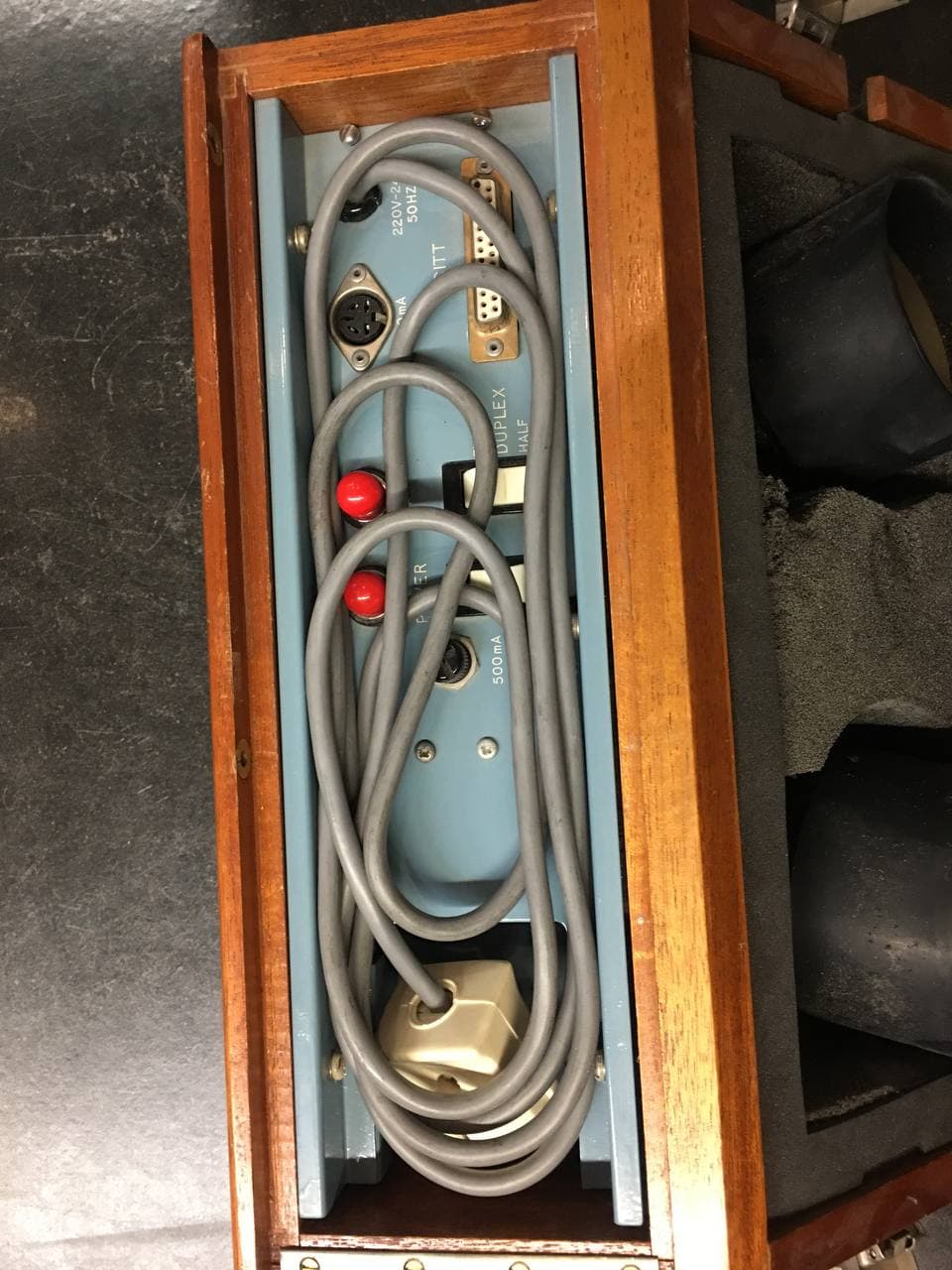
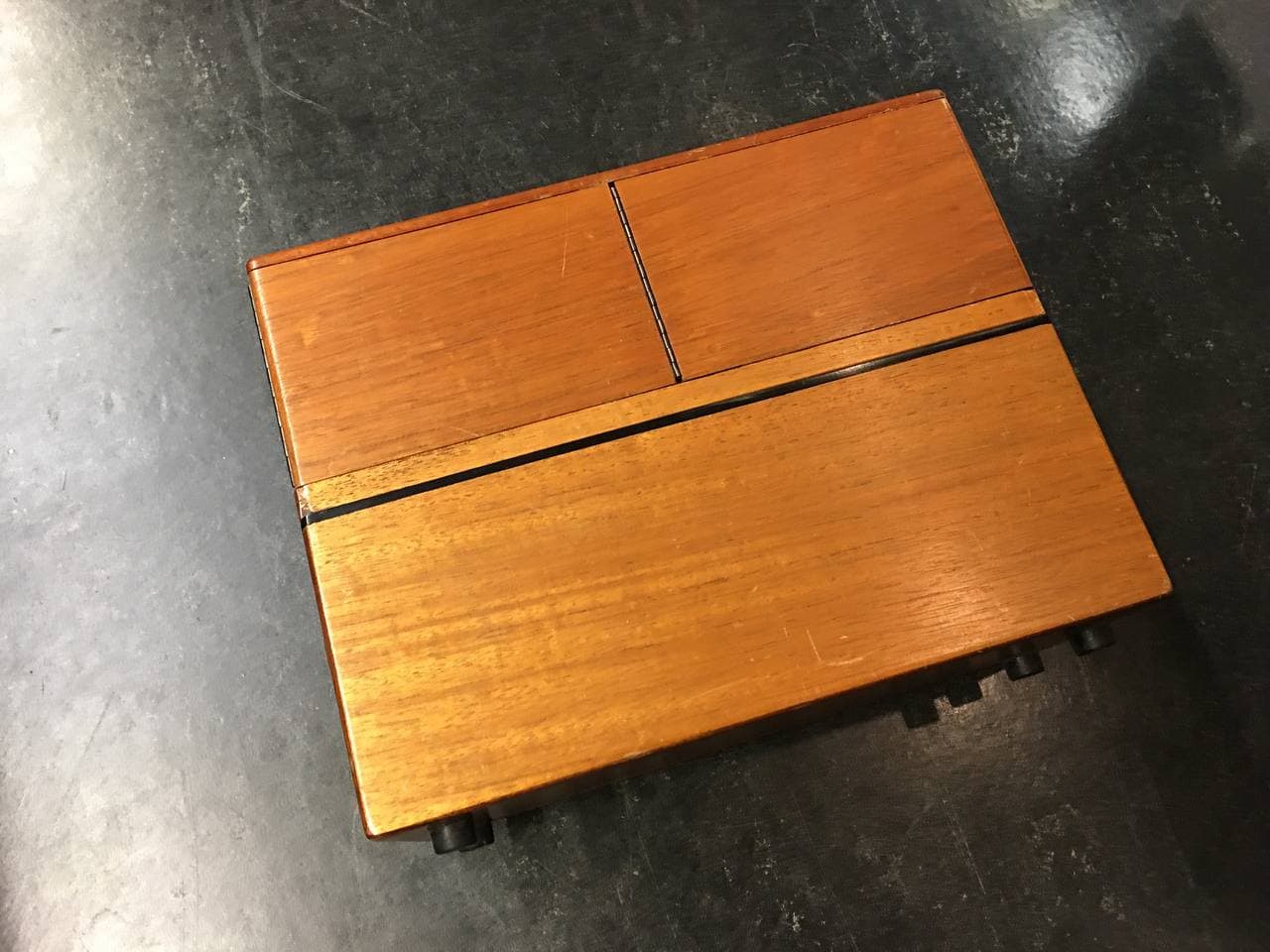
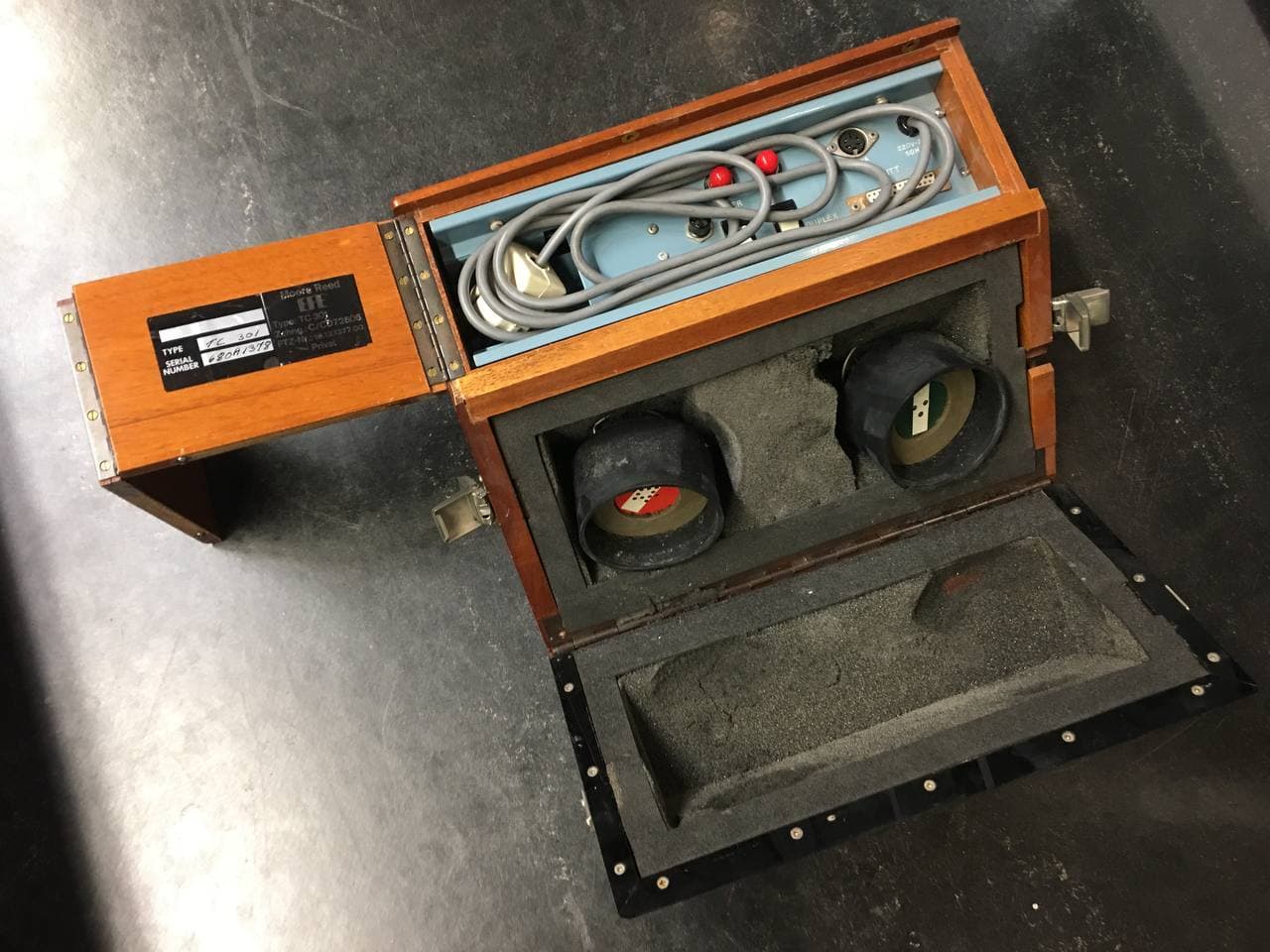
WOERLTRONIC acoustic coupler dataphone s21d-2
XploRe 2.0 Dialogues and Graphics
ZX-Spectrum clone


WOERLTRONIC acoustic coupler dataphone s21d-2
WOERLTRONIC, 1987
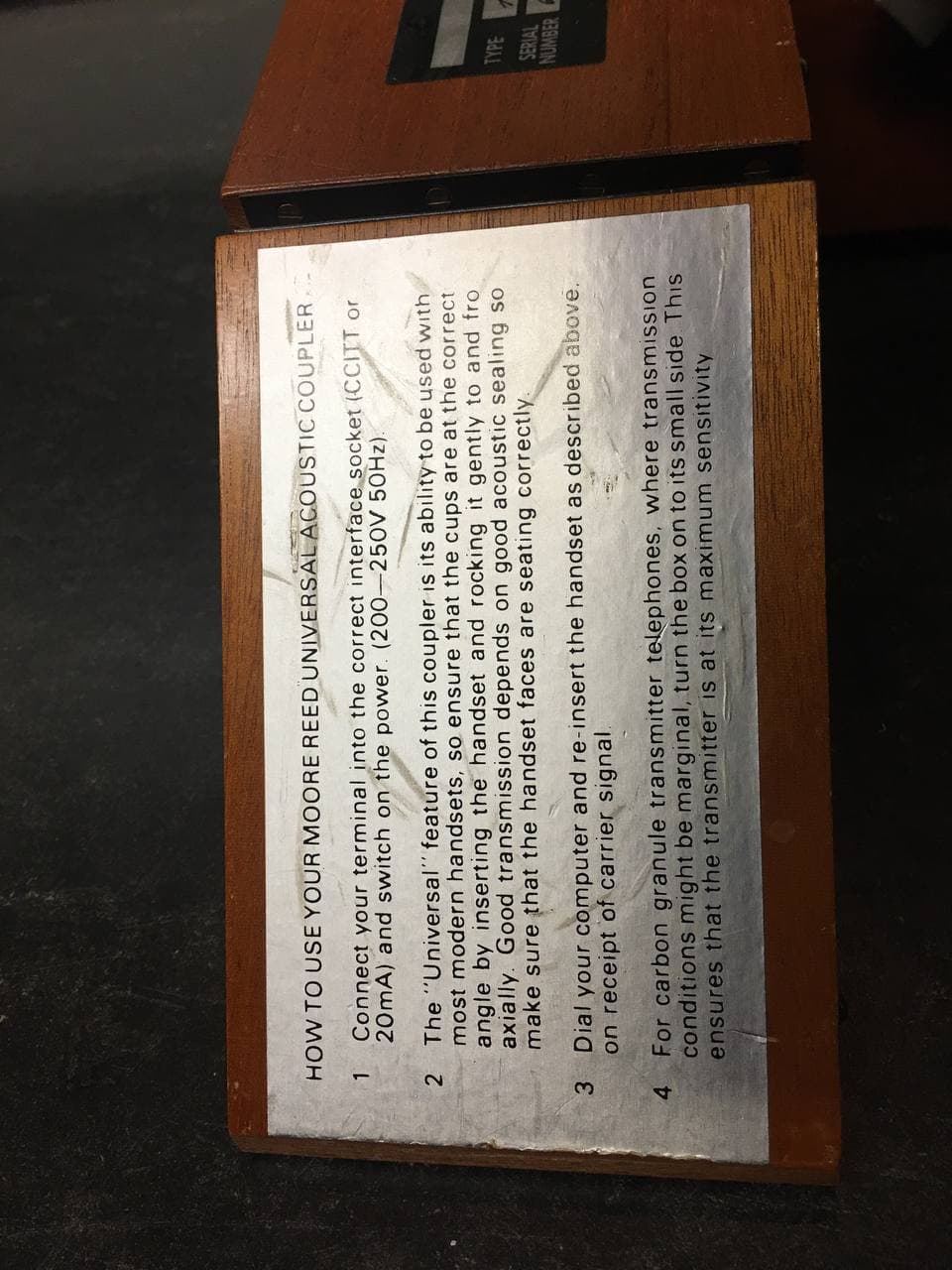
Prior to the deregulation of telephony in many countries of the world, it was illegal to make an electrical connetion to the telephone network. Also, in many households, telephones were hard-wired to wall terminals before connectors like RJ11 and BS 6312 became standardised. With the increased use of computing, acoustic couplers were used to connect modems to the telephone network. Speeds were typically 300 bits per second, achieved by modulating a carrier at 300 baud.
Usually, a standard telephone handset was placed into a cradle that had been engineered to fit closely (by the use of rubber seals) around the microphone and earpiece of the handset. A modem would modulate a loudspeaker in the cup attached to the handset"s microphone, and sound from the loudspeaker in the telephone handset"S earpiece would be picked by a microphone in the cup aatached to the earpiece. In this way signals could be passed in both directions.