|
Infection by Influenza virus is mediated by its viral spike protein
hemagglutinin (HA) which is recognized by sialic acid cell receptors.
After the uptake of the virus particle by endocytosis, the HA undergoes
irreversible conformational change in the acidic environment of the
endosome triggering membrane fusion and subsequent release of the viral
content into the cell. The continuing spread of highly pathogenic avian
influenza H5N1 (HPAI) viruses into poultry populations associated with a
growing number of spill-over infections in humans has heightened the
need to understand how influenza A viruses become pathogenic and
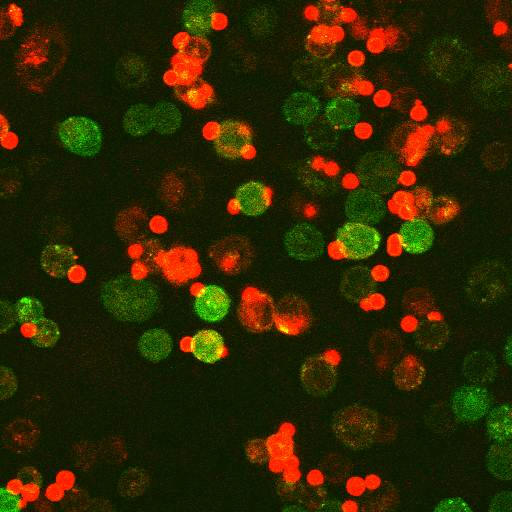
transmissible to humans. In this project we want to elucidate the role of salt bridges for virus infectivity and pathogenicity (Fig. 1). It has been shown previously that an additional salt bridge in the distal HA1 domain decreased or even abolished fusion activity at low pH. Interestingly, this salt bridge has been found to be naturally present in human pathogenic H5N1 strains of the recent outbreaks in 2004 and 2005. We hypothesize that mutations affecting the stability of the influenza virus HA and thus its fusion activity essentially contribute to the evolvement of new and highly infective lineages. |
 |
|
Fig. 1: Salt bridges in the HA protein |