

Research

How does a bacterium build large protein machines, how do these machines work and what do they cost the cell?

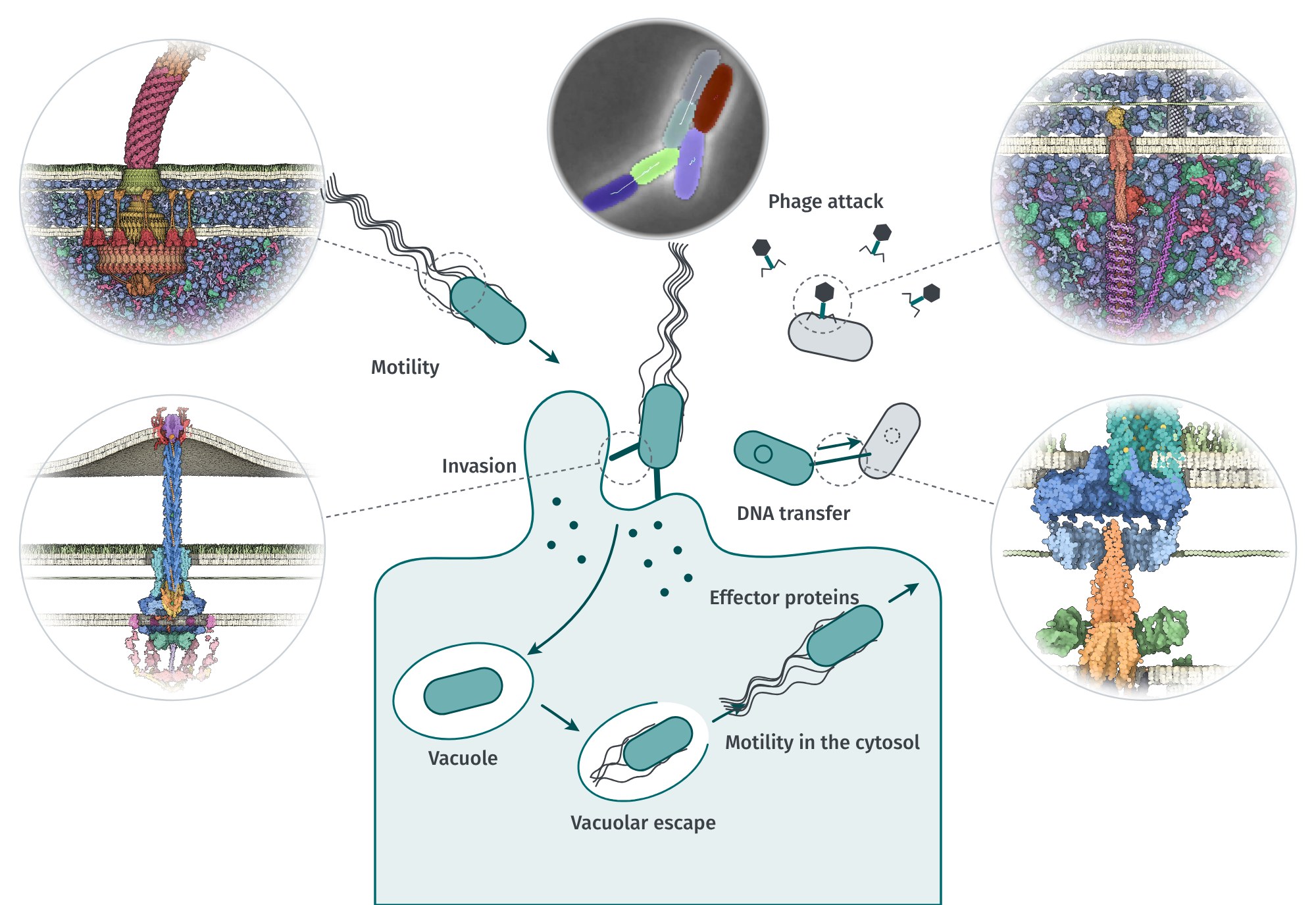
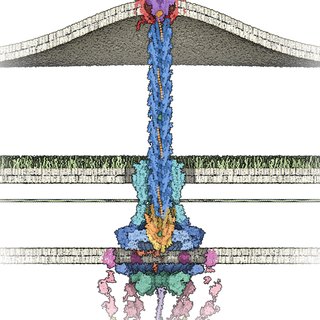
We study these questions with four models: the flagellum, the injectisome, the conjugation system and anti-phage defence systems. We work with Salmonella enterica, Escherichia coli and Vibrio species and combine genetics, microscopy, structural biology and biophysical modelling.

Research topics

Flagella

Assembly, protein export and rotation of the bacterial flagellum

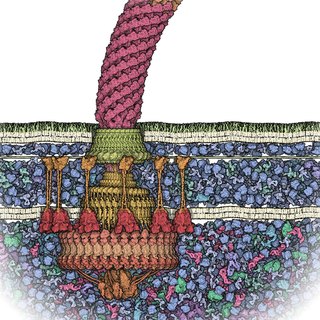
The flagellum is a rotary motor with a filament several times longer than the cell. Most of its subunits are exported by a type-III secretion system and assemble outside the cytoplasm.

Current projects

  • Mechanisms of flagellar regulation, assembly and function
  • Engineering of the flagellar secretion system for protein production

Phage defence

5:2 rotary motors in motility and anti-phage defence

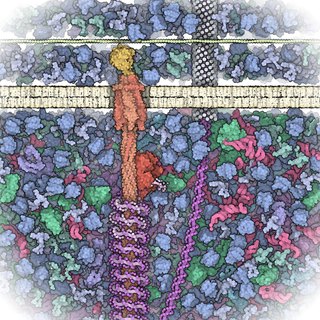
The Zorya anti-phage defence system contains ZorAB, a membrane complex with the architecture of the flagellar stator unit. We study how Zorya detects phage infection and inactivates phage DNA.

Current projects

  • Sensing of phage infection by Zorya

Injectisome

Expression and substrate targeting of the SPI-1 injectisome

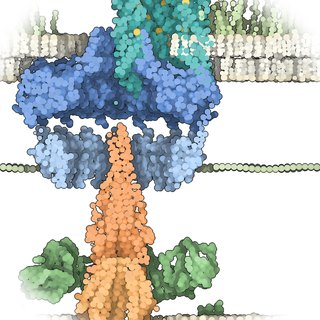
Salmonella injects effector proteins into host cells through the injectisome, a virulence-associated type-III secretion system (vT3SS). We study which cells express it and how its substrates reach the export apparatus.

Current projects

  • Single-cell dynamics of virulence gene expression
  • Substrate targeting to the injectisome

Host and pathogen

Costs and benefits of motility during infection

Flagella cost the cell energy and protein, and the immune system recognises them. We measure under which conditions motility is beneficial for Salmonella.

Current projects

  • Exit strategies of intracellular Salmonella

Image analysis

Image analysis tools for single-cell microscopy

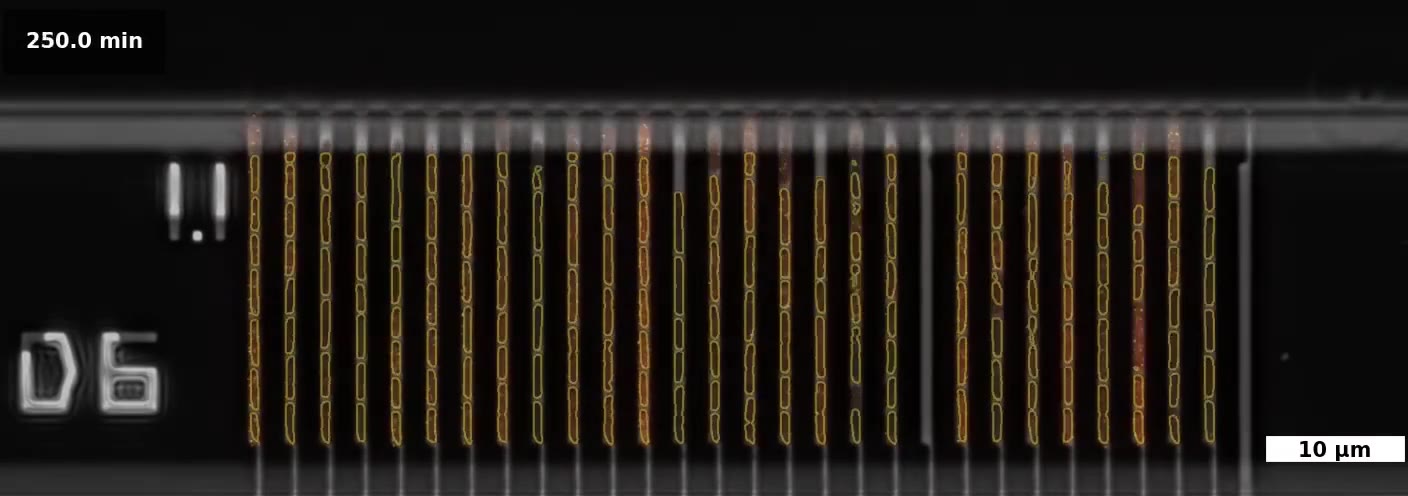
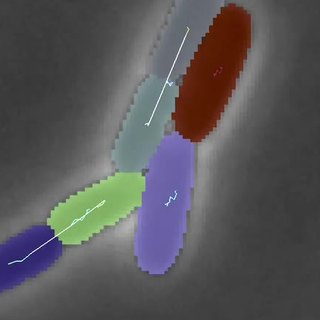
Single-cell experiments generate large time-lapse data sets. We develop software for automated segmentation, tracking and quantification of bacteria.

Current projects

  • Development of image analysis tools

Funding

Our work is funded by the European Research Council (ERC Consolidator Grant BacNanoMachine) and the Deutsche Forschungsgemeinschaft (research grants, the priority programmes SPP 2225, SPP 2330 and SPP 2389, and the ANR-DFG project BacCellFactory). Further funding comes from the Einstein Foundation Berlin, the Berlin University Alliance and the Max Planck Society (Max Planck Fellow programme at the Max Planck Unit for the Science of Pathogens). Earlier funding came from the Helmholtz Association, the Marie Curie programme, the VolkswagenStiftung and the Boehringer Ingelheim Foundation.

The project BacNanoMachine has received funding from the European Research Council (ERC) under the European Union’s Horizon 2020 research and innovation programme (grant agreement No. 864971).

Current funding

  • European Research Council
  • Deutsche Forschungsgemeinschaft
  • ANR – Agence nationale de la recherche
  • SPP 2225 – Exit strategies of intracellular pathogens
  • SPP 2330 – New concepts in prokaryotic virus-host interactions
  • SPP 2389 – Emergent functions of bacterial multicellularity
  • Einstein Foundation Berlin
  • Berlin University Alliance
  • Max Planck Society
  • Max Planck Unit for the Science of Pathogens

Earlier funding

  • Helmholtz Association
  • VolkswagenStiftung
  • Boehringer Ingelheim Stiftung