On March 12 and 13, 2026 we held the Multimodal Ethnography Days in Barcelona, organised by Tomás Criado in cooperation with colleagues from CareNet (UOC), Friccions (ICA) and the Department of Social Anthropology (UB).
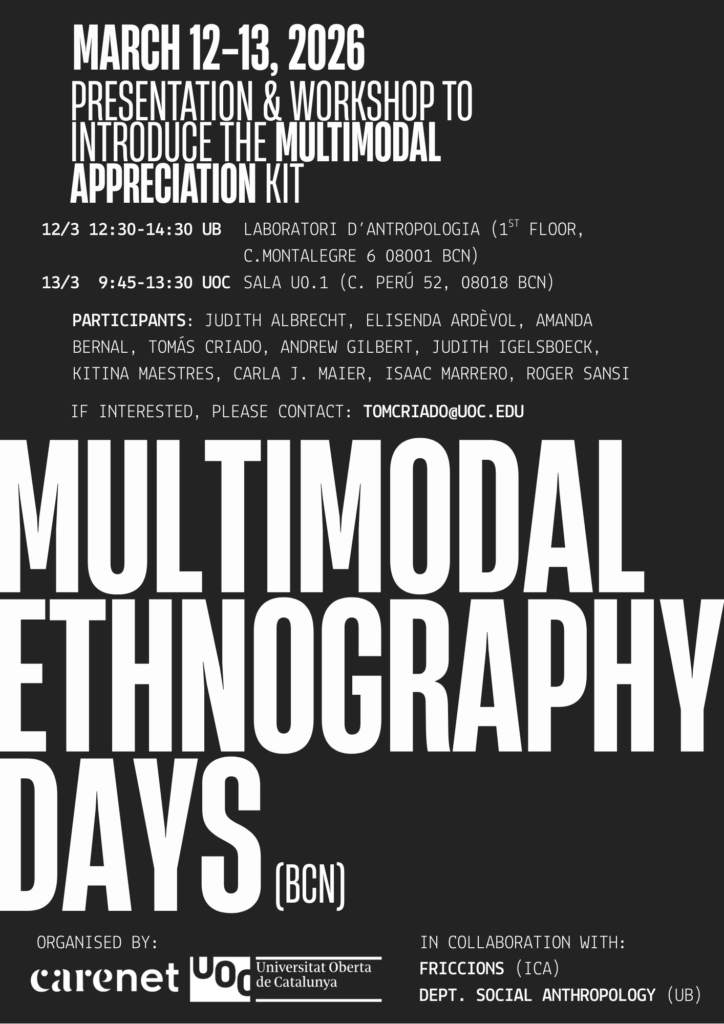
This two-day event served as an occasion to present and put to work our Multimodal Appreciation Kit to a vibrant audience of Barcelona-based researchers.
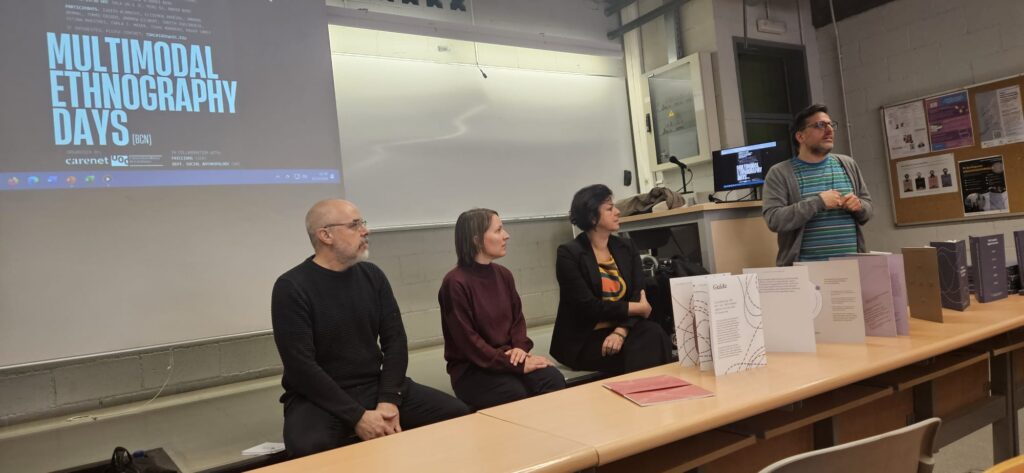
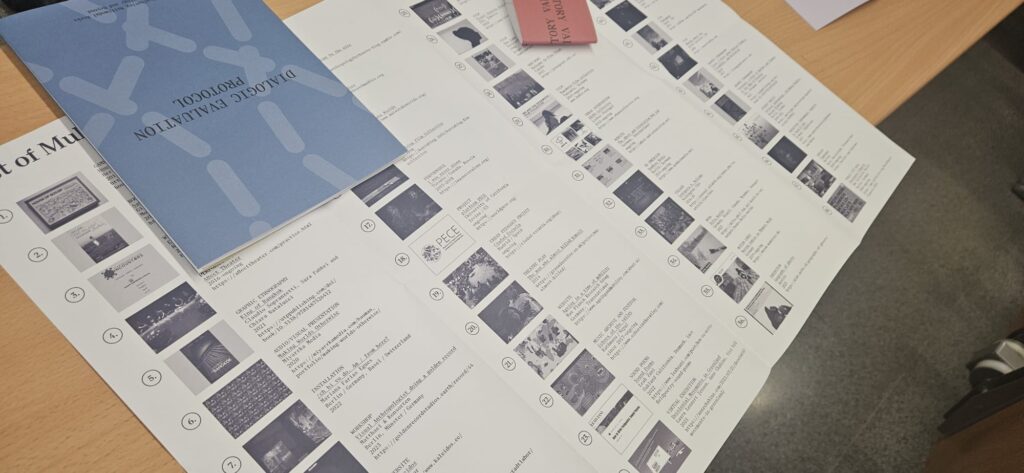
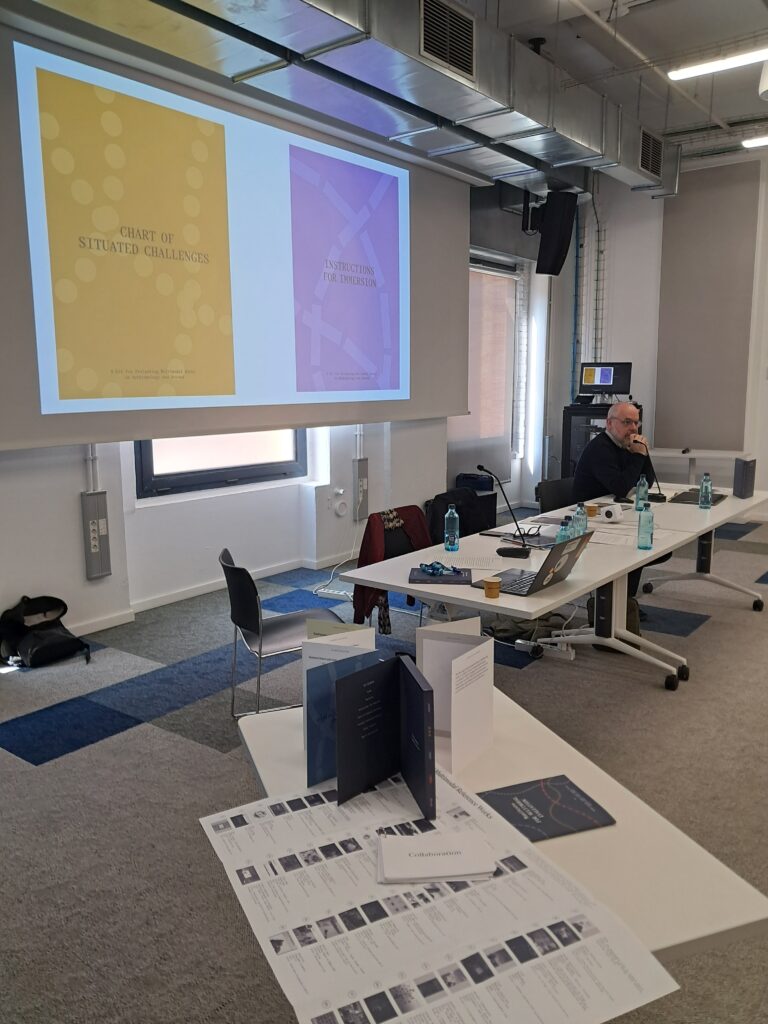
The first day we were graciously hosted by the Department of Social Anthropology of the University of Barcelona (UB). After a presentation of the kit’s manifesto, participants split into groups to test the ‘immersion protocol’ and the cards of the ‘value inventory’ to help appreciate two projects from local colleagues: Isaac Marrero‘s (UB): Tindaya Variations and Amanda Bernal‘s (UB): The eye that imagines (ERC project Visual Trust).
After this, accompanied by Roger Sansi (UB) and Elisenda Ardèvol (UOC), we discussed how these protocols could help change how multimodal work is recognized in academic departments and funding bodies, whilst also exploring the complex interdisciplinary politics of more-than-textual works with an artistic or design component.
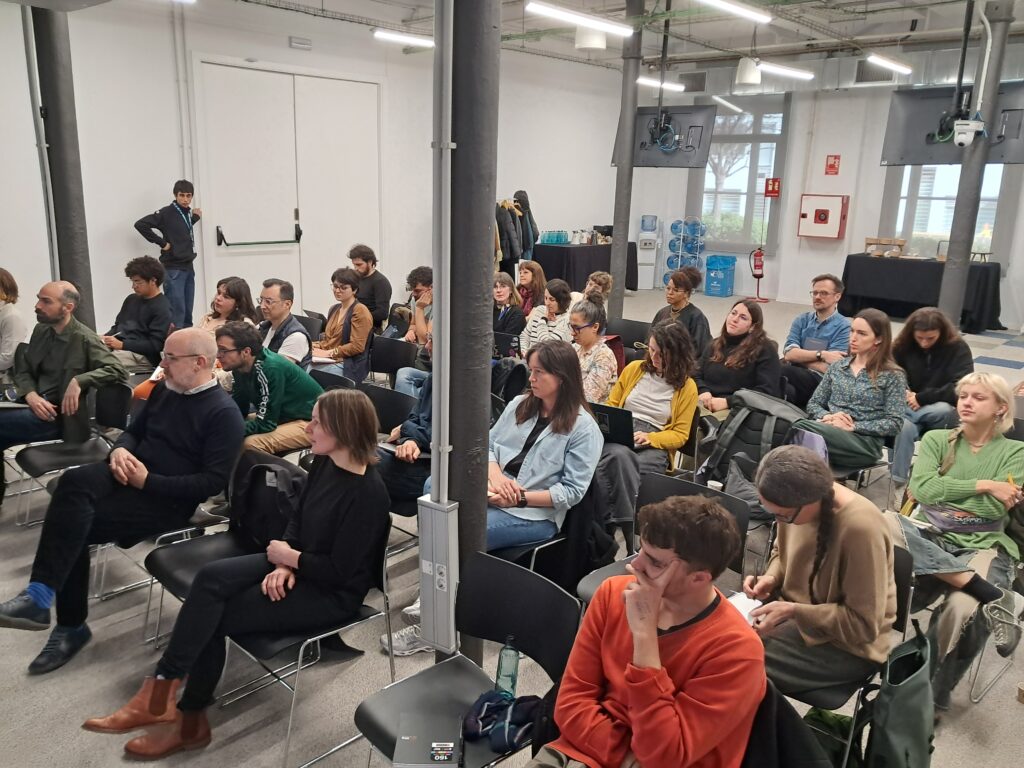
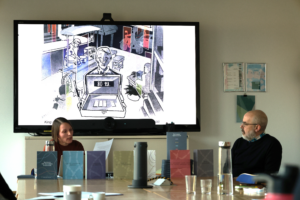
On the second day, we moved to the Open University of Catalonia, hosted by the CareNet research group in conversation with colleagues from the Interdisciplinary Research Centre on Social and Cultural Transformations (UOC-TRÀNSIC). In this second day our kit’s elements were activated through presentations of the projects of Andrew Gilbert, Judith Albrecht, and Carla J. Maier to discuss the affordances and conundrums of multimodal ethnographic projects as part of a more variegated landscape of interdisciplinary research practice. This was followed by a commentary by Judith Igelsboeck (UOC) on the practical challenges of working fiction and social research together in interdisciplinary research projects, and their complex trajectories of appreciation.
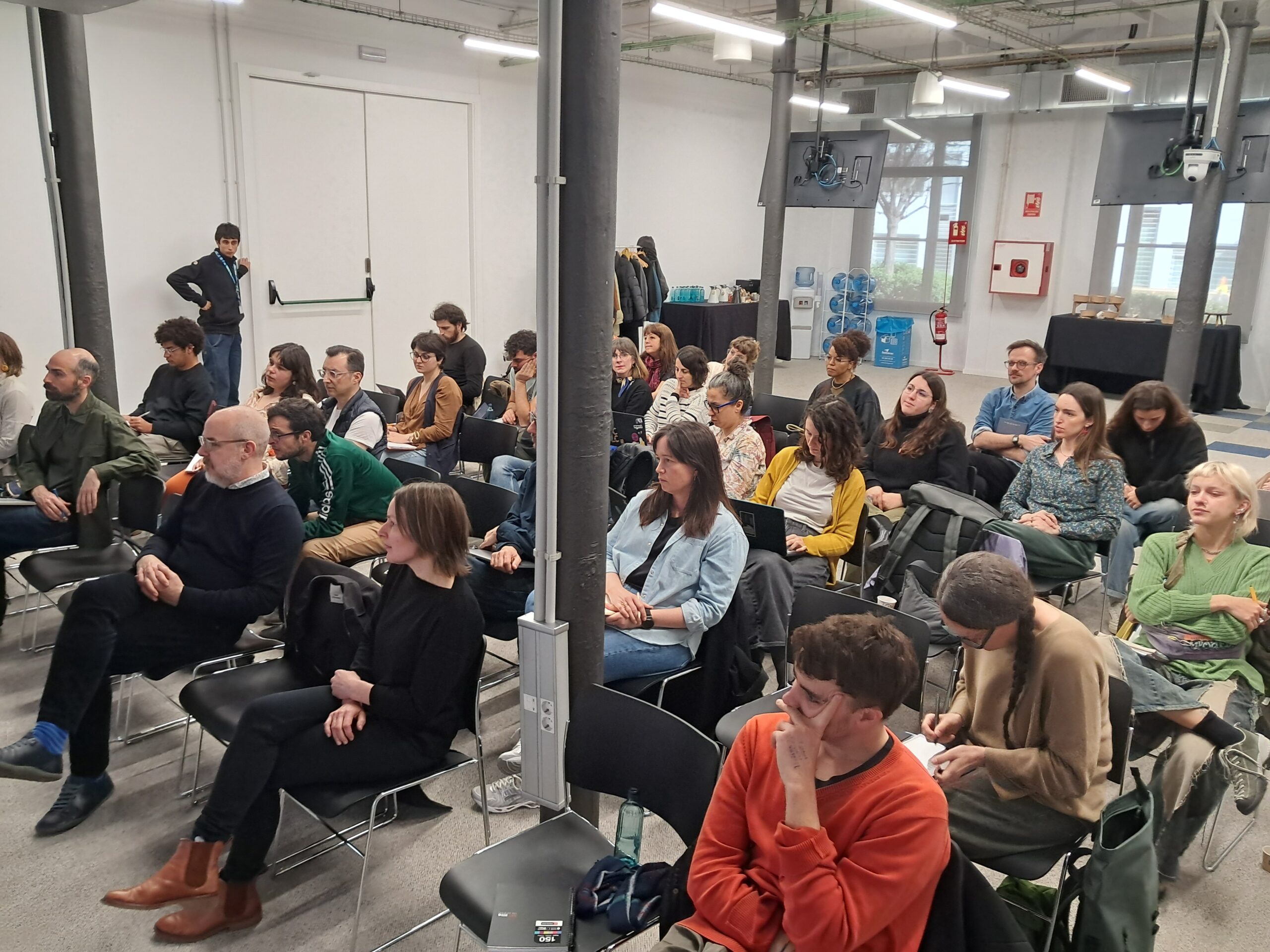
Overall, these were two absolutely vibrant days, with around 60 participants overall, to which we would like to thank their witty questions, enthusiasm and interest. We all walked away having learned so much, gaining insights that will help take the project further into new and exciting avenues. These discussions have brought the appreciation of multimodality much closer to a meaningful conversation about artistic and design research and our own forms of interdisciplinary ethnographic practice.
This event was a collaborative effort, and we are grateful to the participants, commentators, and the institutions that made it happen: CareNet (UOC), Friccions (ICA), and the Department of Social Anthropology (UB), as well support from the Volkswagen Stiftung and the Humboldt-University of Berlin’s Stadtlabor for Multimodal Anthropology.